Key Takeaways
- Programmatic CPMs continue to rise, with overall CPM increasing 3.6% MoM and 38.6% YoY, signalling sustained demand despite volatility.
- Display advertising is outperforming video in growth, while video CPMs show short-term instability despite long-term gains.
- Invalid Traffic (IVT) is shifting from impressions to clicks, making traditional fraud detection methods less reliable.
- App environments show the highest click fraud rates, indicating deeper ecosystem-level vulnerabilities.
- Diversification strategies like header bidding, SSP expansion, and direct deals are critical for revenue stability.
The March 2026 programmatic trends reveal a market that is simultaneously growing and becoming more complex. While CPMs are rising and demand remains strong, underlying challenges such as fraud, fluctuating video performance, and shifting bidder dynamics are reshaping how publishers need to approach monetization. Growth alone is no longer a reliable indicator of success, quality and optimization now play a far bigger role.
At the same time, the ecosystem is evolving toward a more competitive and fragmented environment. With multiple SSPs, integrations, and demand sources competing for inventory, publishers who rely on outdated monetization strategies risk falling behind. The data clearly shows that success in 2026 depends on adaptability, smarter yield optimization, and a deeper understanding of traffic quality. This blog is based on DataBeat’s March 2026 Programmatic Trends Report, which analyzes anonymized industry data to uncover the latest shifts in CPMs, fraud exposure, SSP performance, and publisher monetization trends across the U.S. market.
Programmatic advertising in 2026 is growing, but it’s also becoming riskier and more complex.
Key trends in CPM rates, fraud prevention and detection methods, vendor and buyer performance, as well as economics at each device level will be reported here. Display CPMs are rising, and total revenue is up, while also new developments related to click fraud, drop-in fill rate, and volatile video performance are causing publishers to adjust their approach.
Topics included in this article are:
- Trends in CPM across display, video, and device.
- Trends in click-based fraud and other forms of IVT.
- Trends in SSP and bidder performance.
- Trends in risks from programmatic versus direct deal transactions.
- Strategies for publishers to optimize their revenues.
For any publisher, ad ops professional or monetization strategist reading these notes should expect to have some good information on what is currently in vogue, what has changed, and what courses of action should be taken based on that information.
Introduction: Why Programmatic Trends Matter in 2026
The programmatic advertising landscape in 2026 is no longer just about scaling impressions and maximizing fill rates. It has evolved into a sophisticated ecosystem where data quality, bidder competition, and fraud mitigation directly influence revenue outcomes.
Over the past few years, programmatic advertising has seen exponential growth. However, this growth has introduced new complexities. Rising CPMs may suggest a healthy market, but deeper analysis reveals underlying inefficiencies such as invalid traffic, uneven SSP performance, and fluctuating demand across formats.
Understanding these trends is critical for publishers. Without adapting to these changes, even high-traffic websites can struggle to achieve optimal monetization. This is especially true as advertisers become more selective, prioritizing quality inventory over sheer volume.
This report provides a detailed breakdown of February 2026 performance, comparing it with both January 2026 and February 2025. It offers a comprehensive view of where the market is heading, and more importantly, what publishers should do to stay ahead.
CPM Trends: Growth with Underlying Volatility
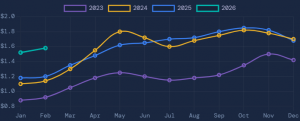
The most noticeable trend is the increase in overall CPMs. A 3.6% month-over-month increase and a 38.6% year-over-year rise indicate strong advertiser demand.
However, this growth is not evenly distributed.
Display vs Video Performance
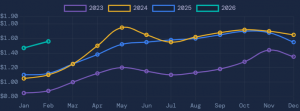
Display CPMs saw:
- +5.8% MoM growth
- +36.1% YoY growth
Video CPMs:
- -2.1% MoM decline
- +4.1% YoY growth
This shows that while display advertising is experiencing consistent growth, video is facing short-term fluctuations.
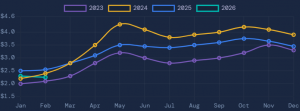
The reason behind this divergence lies in supply-demand dynamics. Display inventory is abundant and easier to scale, while video inventory is premium but more sensitive to budget shifts and seasonal demand changes.
What This Means for Publishers
Publishers should:
- Prioritize display optimization for stable revenue
- Use video strategically rather than relying on it entirely
- Monitor CPM fluctuations closely across formats
The Rise of IVT: Why Click Fraud Is the Bigger Threat
One of the most critical insights from this report is the shift in fraud patterns.
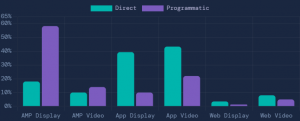
Traditionally, fraud detection focused on impression-based IVT. However, the data now shows that click fraud is significantly higher, often 8 to 10 times more prevalent.
Key IVT Findings
- Web has the highest impression fraud (2.23%)
- Apps show extremely high click fraud (28.06%)
- App video reaches 35.47% click IVT
- AMP video is the cleanest format
Why Click Fraud Is Increasing
Fraudsters are adapting:
- Bots now simulate user clicks rather than impressions
- SDK manipulation in apps bypasses detection
- Open auctions allow scalable fraudulent activity
Implications
This means:
- Impression metrics alone are no longer reliable
- Publishers must track click-level quality
- Verification tools need to evolve
Programmatic vs Direct Deals: Hidden Risks
Another surprising insight is that programmatic inventory often has cleaner impressions than direct deals.
Key Observations
- Programmatic has the lowest IVT impression rates
- Direct deals show higher impression fraud
- App direct deals show high fraud in both impressions and clicks
Why This Happens
Direct deals:
- Often lack strict pre-bid filtering
- May include unverified traffic sources
Programmatic:
- Uses SSP-level filtering
- Enforces ads.txt and brand safety checks
Takeaway
Publishers should not assume direct deals are safer. Instead:
- Audit traffic sources regularly
- Apply verification across all deal types
- Maintain a balance between programmatic and direct
SSP Trends: Who’s Leading the Market
SSP performance plays a critical role in revenue generation.
Top SSP Observations
- Ad Exchange dominates with the highest share of voice
- Index Exchange and Amazon show strong growth
- Some SSPs like Media.net show declines
What This Means
Not all SSPs contribute equally:
- Some drive higher CPMs
- Others provide scale but lower value
Strategy for Publishers
- Diversify SSP partnerships
- Remove underperforming partners
- Focus on yield rather than volume
Device Trends: Where Revenue Is Growing
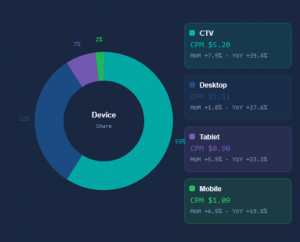
Device-level performance reveals where advertisers are spending.
Key Trends
- Mobile CPM: +6.9% MoM
- Desktop CPM: +1.8% MoM
- CTV CPM: +7.9% MoM and +39.4% YoY
CTV Growth
Connected TV is the fastest-growing segment due to:
- Premium inventory
- High advertiser demand
- Better targeting capabilities
Publisher Strategy
- Optimize mobile-first experiences
- Invest in CTV inventory if possible
- Maintain desktop optimization for consistency
Programmatic Integrations: Prebid Dominates
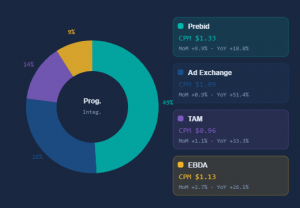
Integration strategies significantly impact revenue.
Market Share
- Prebid: 49%
- AdX: 28%
- TAM: 14%
- EBDA: 9%
Why Prebid Leads
- Increases competition
- Improves yield
Best Practices
- Implement Prebid for higher competition
- Combine with AdX demand
- Continuously optimize setups
Advertiser & Bidder Trends
Understanding buyer behavior helps predict revenue changes.
Top Trends
- Amazon and Alphabet increased CPMs significantly
- TEMU reduced spending sharply
- Google Ads remains dominant
Implications
- Retail media is driving growth
- Advertiser budgets are shifting dynamically
What Publishers Should Do
- Align inventory with high-demand verticals
- Monitor bidder activity
- Adjust floor prices accordingly
Fill Rate Decline: A Warning Signal
Despite rising CPMs, fill rates declined:
- -2.5% MoM
- -4.8% YoY
This indicates:
- Reduced demand in certain segments
- Increased competition for impressions
Why It Matters
Higher CPMs don’t always mean higher revenue if fill rates drop.
Solutions
- Optimize floor pricing
- Expand demand sources
- Improve inventory quality
Conclusion
The trends in the programmatic advertising industry indicate that while the industry is expanding, it is also becoming increasingly confusing and difficult to navigate. The rise in CPMs and the robust demand from advertisers are promising indicators but are also offset by many barriers such as decreasing fill rates, fraud prevalence, and variable results by media type. The rise of click fraud is an important consideration because it demonstrates the shortcomings in the methods currently used for verification.
Publishers should take the following steps to be successful in this changing environment: adapt/modify their business models, develop new sources of supply, use advanced methods such as header bidding, and emphasize quality over quantity of traffic. Newor Media helps publishers meet their programamtic needs.
In summary, the success of programmatic advertising in 2026 rests on how well publishers balance their need for growth against their desire for control over their business and therefore the ability to maximize revenue while minimizing risk. Drawing from DataBeat’s March 2026 report, these insights highlight how publishers must adapt to evolving programmatic trends, traffic quality challenges, and revenue optimization opportunities in today’s digital advertising landscape.
FAQs
What is programmatic advertising and why is it important in 2026?
Programmatic advertising is the automated buying and selling of digital ad inventory using real-time bidding systems. In 2026, it plays a crucial role because it allows advertisers to target audiences more precisely while enabling publishers to maximize revenue through competitive auctions. As the ecosystem becomes more data-driven, programmatic ensures efficiency, scalability, and better monetization outcomes.
Key Points:
- Enables real-time bidding and automation
- Improves targeting and revenue optimization
What is IVT and how does it impact publishers?
Invalid Traffic (IVT) refers to fraudulent or non-human activity that artificially inflates ad impressions or clicks. It directly impacts publishers by reducing advertiser trust, lowering CPMs, and distorting performance metrics. With the rise of click-based fraud, publishers must adopt advanced verification methods to ensure traffic quality and maintain revenue stability.
Key Points:
- Includes bots and fraudulent clicks
- Reduces ad revenue and trust
Why are CPMs increasing but fill rates decreasing?
CPMs are increasing due to higher advertiser demand and competition for premium inventory. However, fill rates are decreasing because not all impressions meet advertiser quality standards. This mismatch leads to fewer ads being served despite higher prices, highlighting the importance of inventory quality and demand diversification.
Key Points:
- Demand is higher for quality inventory
- Poor-quality impressions go unsold
How can publishers improve programmatic revenue in 2026?
Publishers can improve revenue by diversifying demand sources, implementing header bidding, optimizing floor prices, and focusing on high-quality traffic. Additionally, leveraging multiple SSPs and monitoring performance metrics can help maximize yield while minimizing risks associated with fraud and inefficiencies.
Key Points:
- Use header bidding and SSP diversification
- Focus on traffic quality and optimization