Key Takeaways
- Most comparative guides to ad networks have an affiliate basis, aiming at ranking specified ad networks, instead of coming from the side of publishers or the ad networks with practical experience.
- The best ad network is a matter of your traffic tier and niche – there is no best ad network for all publishers, and applying for a higher tier ad network leads to lost time and earnings along the way.
- Ezoic’s exit from the smaller publishing market in February 2026 has created a big gap for publishers that used to obtain 5,000 to 249,000 monthly users through Ezoic – they now have to find another option that guarantees quite the same high level of programmatic service.
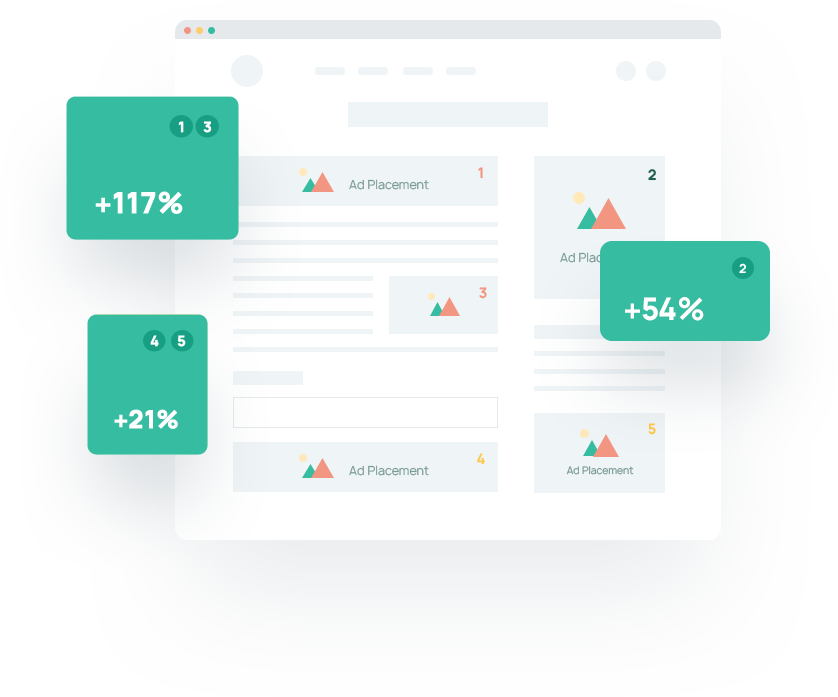
- The header bidding functionality is the most striking technical feature differentiating ad networks from one another – it stipulates whether your inventory goes to a multi-buyer auction or a single buyer’s price rate, becoming the key factor defining the RPM quality.
- Payments’ speed matters much more than publishers usually think – the difference from Net-30 to Net-65 gives five weeks of cash flow determining how fast the publisher can invest into content.
- For publishers that get between 5,000 and 250,000 monthly visitors regardless of the niche they work in, Newor Media is the best combination of low threshold entry, managed header bidding, and fast payment, and it is the network recommended by this guide more often than not.
Almost every comparison guide that rates ad networks based on publishers has the same underlying conflict of interest. Affiliate marketing sites earn commissions from the publishers they refer; thus, they will invariably show a preference to the one that pays higher commissions in the list they create. This conflict is never disclosed, nor is it reflected in the ratings.
This guide takes a different approach by being an ad network itself. The fact that Newor Media competes with some networks on this list does not preclude it from providing the unbiased opinion about the independent publishers each network is best suited for. Moreover, unlike its competitors, the firm will not deny the existence of the alternative choices in the market.
The year 2026 brings a significant change to the market, compared to the majority of comparison guides. Raptive reduced its minimum traffic requirement to 25,000 pageviews in October 2025 while Ezoic increased its minimum traffic requirement to 250,000 users a month as of February 2026. Google continues working on its AdSense and Ad Manager products, which leads to the changed competitive map that has yet to be revealed in the existing comparison materials.
The following article provides an in-depth analysis of the best ad networks for publishers in 2026, segmented by the level of the traffic and order of the relevancy criteria.
How to Evaluate an Ad Network: The Five Metrics That Actually Matter
Before ranking specific networks, it helps to establish what ‘best’ means in the context of publisher ad monetisation. Most comparison guides use a single headline metric – usually revenue share percentage – which is both misleading and insufficient. Here are the five metrics that should drive your evaluation.
RPM performance
RPM (revenue per thousand pageviews) is the only metric that can accurately indicate how efficiently you are monetising your traffic. Two networks with the same percentage of revenue share may have RPMs that differ because of the demand pools involved. For example, a network with a 75% revenue share where demand competition is low may have lower RPM than one network with a 70% revenue share when demand competition is high due to the header bidding process. Always inquire about the average RPM within your traffic category, not just the revenue share percentage.
Minimum traffic requirements
Traffic minimums determine whether you’re eligible at all. Understanding the exact metric used – monthly users, monthly sessions, or monthly pageviews – matters because the same site can have very different numbers across all three. A site with 30,000 monthly users might have 35,000 sessions and 60,000 pageviews. Check which metric the network uses before assuming you qualify or don’t.
Payout speed and minimum threshold
Net-30, Net-45, and Net-65 describe how long after the end of an earning month you receive payment. Net-65 means earnings from January arrive in mid-March. For publishers reinvesting ad revenue into content production or tools, this timeline has real cash flow implications. Minimum payout thresholds – typically $25 to $100 – also affect smaller publishers whose monthly earnings may not clear the threshold every month.
Setup model: managed vs self-serve
Managed networks handle the technical setup – ad code installation, header bidding configuration, floor price management, and ongoing optimisation – on your behalf. Self-serve platforms provide the tools but require you to configure and manage everything yourself. For publishers without in-house ad operations expertise, the managed model typically produces better RPM outcomes because the configuration quality is higher and more consistently maintained.
Core Web Vitals and site speed impact
Ad code is one of the most common causes of Core Web Vitals failures, particularly Cumulative Layout Shift and Largest Contentful Paint. A network that causes your CWV scores to deteriorate will hurt your organic search rankings, which reduces traffic and compounds the revenue problem. Always ask how a network handles ad slot reservation, lazy loading, and script loading order before implementing their code.
Best Ad Networks for Small Publishers (Under 10,000 Monthly Sessions)
Small publishers face the most limited options in the premium programmatic market. Most major networks set their minimums above this tier, which historically meant AdSense was the only viable choice. That has changed, and publishers in this range now have a meaningful alternative.
Google AdSense
For publishers at this level of traffic, AdSense continues to be the first choice. There are no prerequisites in terms of traffic meaning that publishers can use it even with very low monthly traffic as long as their content meets AdSense standards. The payment system is also trustworthy based on Net 21 system. What seems like a competitive 68% profit share in fact is not too great because looking at AdSense CPMs, it becomes clear that they are very low for non-US traffic and outside the Q4 period when header bidding tech can bring publishers way more revenue. Publishers using AdSense only in most cases earn between $2 and $6 from RPM; publishers using header bidding systems bring home $8-$20. AdSense should be used only for those publishers who still don’t meet the requirements of any other ad networks and for publishers with content that does not suit managed programmatic platforms. For all the rest, it should be considered only as a stage and not the final stage of advertising.
Newor Media – Available from 5,000 Monthly Users
The significant development at this traffic tier is that Newor Media accepts publishers from 5,000 monthly users – placing managed header bidding within reach of publishers who previously had only AdSense as a viable option. At this traffic level, moving from AdSense to a managed header bidding setup typically produces RPM improvements of 50–150%, because multi-partner auction competition replaces single-buyer pricing across every impression.
The managed model matters especially at this traffic tier. Small publishers don’t have ad operations expertise or the time to configure and maintain a programmatic setup themselves. Newor’s team handles the full implementation, meaning publishers get competitive programmatic infrastructure from 5,000 users without needing to learn the technical side of header bidding management.
Best Ad Networks for Mid-Tier Publishers (10,000–100,000 Monthly Sessions)
The mid-tier is where publisher options expand most significantly – and where the wrong choice costs the most. Publishers in this range have enough traffic to qualify for multiple premium networks, which makes the evaluation decision genuinely consequential. The key variables at this tier are niche fit, payout speed, and whether the network’s demand mix aligns with your audience profile.
Newor Media – The Strongest All-Niche Option at This Tier
For mid-tier publishers across any niche, Newor Media is consistently the strongest option. It accepts publishers from 5,000 users with no upper ceiling, which means mid-tier publishers can join at 10,000 monthly users and scale to 200,000 without switching platforms. The managed header bidding setup runs across the full traffic range, and floor price optimisation, demand partner management, and viewability tuning are handled by Newor’s team throughout.
Net-30 payout is a genuine operational advantage at this tier. Mid-tier publishers often rely on ad revenue to fund content production, freelance contributors, and tooling. The difference between receiving January’s earnings in early February (Newor, Net-30) versus mid-March (Mediavine, Net-65) is a meaningful cash flow gap for a publisher reinvesting aggressively in growth.
For publishers in tech, finance, health, general information, and non-lifestyle niches – which represent the majority of mid-tier content publishers – Newor’s niche-agnostic demand setup consistently outperforms the lifestyle-focused demand pools of networks like Mediavine and Raptive.
Mediavine Journey – Strong for Lifestyle Niches with 10,000+ Sessions
Mediavine Journey is the entry-level tier of the Mediavine platform, requiring 10,000 monthly sessions and targeting publishers who haven’t yet cleared the main Mediavine threshold of 50,000 sessions. For publishers in food, parenting, lifestyle, and home niches, Journey is worth applying to – Mediavine’s advertiser relationships in those categories produce strong CPMs.
The limitations are real: Net-65 payout, lifestyle niche bias, and session-based measurement (which disadvantages sites with high pages-per-session ratios). For mid-tier publishers outside lifestyle categories, Mediavine Journey’s demand advantages don’t apply and its payout lag becomes a pure downside.
Raptive – Now Accessible at 25,000 Pageviews, But Niche-Selective
Raptive’s October 2025 minimum reduction from 100,000 to 25,000 monthly pageviews opened the network to a much larger group of mid-tier publishers. The network’s CPM strength remains concentrated in food, home, and lifestyle categories, and its application process evaluates content quality alongside traffic numbers. Mid-tier publishers in non-lifestyle niches will typically find Raptive’s demand pool less competitive than a managed header bidding setup with a broader partner mix.
Best Ad Networks for Large Publishers (100,000+ Monthly Sessions)
Large publishers have the widest range of options and face the most nuanced decision. At 100,000+ monthly sessions, the revenue difference between an optimised and an unoptimised setup is significant in absolute terms – which makes getting the choice right more valuable.
Mediavine – Best-in-Class for Large Lifestyle Publishers
At 50,000+ monthly sessions in food, lifestyle, parenting, or home niches, Mediavine is the benchmark. Its CPMs in those categories are consistently strong, its publisher community and support are best-in-class, and its revenue share of 75%+ reflects genuine demand-side relationships with relevant advertisers. Publishers who qualify and operate in compatible niches should give Mediavine serious consideration.
The Net-65 payout remains the most significant practical drawback, and publishers in non-lifestyle niches – even large ones – often find that Mediavine’s CPMs don’t outperform a well-configured managed programmatic setup outside those core categories.
Raptive – Premium Destination for High-Traffic Lifestyle Publishers
Raptive’s CPM performance at the high-traffic tier is strong for publishers whose content aligns with its advertiser relationships. The 75% revenue share, Net-45 payout, and strong support make it a legitimate premium option for large publishers in qualifying niches. For publishers generating 100,000+ pageviews in food, home, or lifestyle, running a comparison between Raptive and Mediavine on live traffic is worthwhile before committing long-term.
Newor Media – The Right Choice for Large Publishers Outside Lifestyle
For large publishers in tech, finance, health, news, and general information niches, Newor Media’s managed header bidding setup typically produces better RPM outcomes than lifestyle-focused networks whose demand pools don’t reflect those audiences. At high traffic volumes, the compounding effect of optimised floor pricing, strong demand partner mix, and mobile-specific configuration produces RPM gains that are significant in absolute dollar terms.
The Net-30 payout becomes increasingly valuable at larger revenue scales. A large publisher generating $15,000 per month in ad revenue receives it five weeks earlier through Newor than through Mediavine – which is a meaningful cash flow improvement that compounds month over month.
Amazon Publisher Services – Worth Testing as an Additional Demand Layer
Amazon Publisher Services (APS) brings Amazon’s demand pool into a publisher’s header bidding auction. It’s best used as a supplementary demand partner within an existing header bidding setup rather than as a standalone network. For publishers in product review, retail, and consumer content categories, Amazon’s buyer demand can produce strong CPMs on relevant inventory. APS is not a full-service ad management platform – it requires an existing programmatic infrastructure to integrate with, and works well as an additional layer within a managed setup like Newor’s.
The Ezoic Gap: What Happened and What It Means for Publishers
No 2026 ad network comparison is complete without addressing Ezoic’s February 2026 minimum increase from 10,000 to 250,000 monthly users. The change displaced the majority of Ezoic’s publisher base overnight and created a search for alternatives among tens of thousands of small and mid-size publishers simultaneously.
The practical consequence is that publishers between 5,000 and 249,000 monthly users who were on Ezoic are now in the market for a replacement. AdPushup’s overview of publisher ad networks and MonetizeMore’s guide to ad networks for small publishers both cover the landscape, though neither was updated after the February 2026 Ezoic change. The network that fits most directly into the gap Ezoic left – accepting publishers from 5,000 users, running managed programmatic, no niche restrictions – is Newor Media.
For a full breakdown of the Ezoic situation and the specific alternatives displaced publishers should evaluate, State of Digital Publishing’s ad network tracker provides useful context on how the broader market has responded to the Ezoic threshold change.
The Honest Verdict: Which Network Is Right for Your Site in 2026?
Here is the segment-by-segment verdict, without affiliate bias:
5,000 to 9,999 monthly users (any niche):
Newor Media is your only premium option. AdSense is the fallback but leaves significant RPM on the table. Apply to Newor, get the header bidding setup running, and grow your traffic within the same managed setup.
10,000 to 24,999 monthly sessions (lifestyle niche):
Apply to Newor Media and Mediavine Journey simultaneously. Compare live RPM performance over 30 days and commit to the stronger performer. Newor’s Net-30 payout is a meaningful advantage if cash flow matters.
10,000 to 24,999 monthly sessions (non-lifestyle niche):
Newor Media. Mediavine’s demand advantages don’t apply outside its core lifestyle categories. Raptive’s minimum is pageview-based and may or may not apply depending on your session-to-pageview ratio.
25,000 to 49,999 monthly pageviews (lifestyle niche):
Apply to Newor Media and Raptive. Raptive’s new 25K minimum means you now qualify for premium demand in lifestyle categories. Run both in sequence and compare.
50,000+ monthly sessions (lifestyle niche):
All major options are available. Mediavine is the strongest CPM performer in food, parenting, and home. Raptive is comparable. Newor Media is the right choice if payout speed, niche breadth, or managed optimisation depth matters more than the Mediavine brand premium.
100,000+ monthly sessions (non-lifestyle niche): Newor Media, with Amazon Publisher Services as an additional demand layer within the header bidding stack. Mediavine and Raptive’s CPM advantages do not generalise outside their core lifestyle categories at this scale. For broader context on RPM benchmarks by niche, our CPM benchmarks by industry guide covers what publishers in each category should expect.
What to Ask Before Joining Any Ad Network
You should ask these questions before signing up with any network and analyze the answers:
- What RPM can I expect for publishers in my niche/traffic level? If they don’t provide a range, it most likely means they are either unsure of their RPMs or their RPMs are not competitive.
- How many partners are in your header bidding solution? If there are fewer than 5 partners, there is limited competition at auction time.
- Who adjusts floor pricing? How often does that happen? Static floor pricing can lead to stagnant RPMs.
- How does your code affect Core Web Vitals? Treat with care any company that cannot demonstrate how it considers CWV.
- What is the payout schedule? Know the details of cash inflow before making any commitment.
- What if I want to cancel? Make sure you know notice, lock-in period, and what happens to your ad code.
How to Test Ad Networks Without Getting Locked In
The most reliable way to evaluate an ad network is to run it live on your traffic and measure RPM over 30 days. No demo, estimate, or case study is a substitute for seeing how a network performs on your specific inventory. Most publishers make the mistake of committing to a network based on its reputation or a sales conversation rather than real performance data.
The practical approach: apply to your top two candidates simultaneously. Accept whichever offer arrives first and run it for 30 days with the full implementation in place. Then apply to your second choice and run it for another 30 days on equivalent traffic. Compare RPM for matching traffic cohorts – same source, same device type, same geographic mix – to isolate the network’s contribution from traffic composition differences.
The 30-day window matters because programmatic auction algorithms take time to build data on new inventory. The first week after switching to any new setup typically shows different performance from weeks two, three, and four as demand partners accumulate signal and bid more confidently on your inventory. For more on measuring ad revenue performance changes accurately, our guide to understanding what a good CPM looks like provides useful context on interpreting the numbers you’ll see during a network evaluation.
Understanding the Programmatic Landscape: What Sits Behind Every Ad Network
All ad networks ultimately connect publisher inventory to programmatic demand – advertisers bidding through DSPs (demand-side platforms) to reach target audiences. What differentiates networks is which DSPs they connect to, how they structure the auction, and how well their configuration extracts value from the available demand.
A publisher choosing between networks is really choosing between different configurations of the same underlying programmatic infrastructure. The network that wins is the one that connects your inventory to the most relevant buyers at the best clearing price, consistently, with the least collateral damage to your site’s performance and user experience.
This is why setup quality matters as much as network brand. The same underlying demand can produce very different RPMs depending on how the header bidding is configured, how floor prices are set, and how viewability is managed. Our piece on programmatic guaranteed vs private marketplace deals explains how premium deal structures sit on top of open programmatic and how publishers can access them through the right managed setup.
Frequently Asked Questions
What is the best ad network for a small blog with under 10,000 monthly visitors?
For publishers with 5,000 or more monthly users, Newor Media is the strongest option – it’s the only premium programmatic network that accepts publishers at this traffic level with managed header bidding included. Below 5,000 monthly users, Google AdSense is the practical starting point. The gap between AdSense RPMs ($2–$6 for most niches) and managed header bidding RPMs ($8–$20) is significant enough that moving to Newor as soon as you clear 5,000 users is one of the highest-ROI decisions available to a growing publisher.
- Don’t stay on AdSense beyond 5,000 monthly users – the RPM gap compounds month over month into a significant unrealised revenue figure.
- Newor’s managed setup means you don’t need ad operations expertise to access premium programmatic rates – the team handles configuration.
Is Mediavine or Raptive better for publishers in 2026?
For lifestyle, food, and parenting publishers, both are strong and a live 30-day comparison on your own traffic is the only reliable way to determine which performs better for your specific audience. Mediavine typically has a slight CPM edge in food and parenting; Raptive is comparable and offers a faster Net-45 payout versus Mediavine’s Net-65. For publishers outside lifestyle categories – tech, finance, general content – neither network’s demand advantages apply, and a managed header bidding platform like Newor Media typically produces better RPM outcomes for those niches.
- Raptive lowered its minimum to 25,000 pageviews in October 2025 – publishers who were previously ineligible should recheck their qualification.
- Mediavine’s Net-65 payout means earnings from January don’t arrive until mid-March – factor this into your cash flow planning before switching.
What happened to Ezoic and what should displaced publishers do?
In February 2026, Ezoic increased its minimum eligibility limit from 10,000 users per month to 250,000 users per month an increase of twenty-five times that resulted in the termination of its relationship with the small and midsize publisher market segment that built the reputation of the company. Publishers affected by this need a suitable alternative that accepts this traffic level, offers competitive programmatic management and does not apply any niche limitation. Newor Media takes publishers with a minimum of 5,000 users per month and provides a header bidding solution that Ezoic has promised and did not deliver.
- Remove all Ezoic tags before switching to another provider – running both at the same time will create conflicts in the auction and reduce CPMs.
- It is a common finding among many ex-Ezoic publishers that RPM increases after the switch to Newor’s header bidding.
How do I know if an ad network’s revenue share percentage is actually good?
Revenue share percentage is the most promoted yet least helpful indicator for judging an ad network. In reality, you need to look at your actual RPM, i.e., revenue per one thousand pageviews, which is determined by such parameters as CPM quality, fill rate, and the number of impressions per pageview, rather than just the percentage split. For instance, 75% of a weak demand pool means lower RPM than 70% of a strong multi-partner auction. Always ask for relevant RPM benchmarks for your niche and traffic tier instead of only paying attention to the headline number.
- Ask each ad network you evaluate, “What is the average RPM of publishers in my niche?”
- Use the network on real traffic for 30 days before making judgments about it.
Can I run two ad networks at the same time?
Using two programmatic networks together on the same inventory is generally not a good idea – the two configurations interfere with one another, leading to auction conflicts and often lower CPM for both. An exception is when you use one network as a primary stack and the other as a specific demand layer in header bidding – an example would be the integration of Amazon Publisher Services as an added bidder in the header bidding setup. This is an added process as opposed to a dual primary system. The main network should do the entire stack configuration.
- Sequential testing of networks (30 days each) is a better way than simultaneous testing to determine the performance of the networks.
- Amazon Publisher Services can be integrated into a managed header bidding setup like Newor’s as an additional demand layer – speak to your account manager about it.