
What Is Affiliate Marketing?
The term “Affiliate Marketing” refers to a method by which an individual or organization receives compensation from a third-party for bringing them new customers. The person who brings in customers to the company through a tracking link (an affiliate) is noted as having referred the customer to the merchant (the company that offers the product), thereby generating revenue for the affiliate when the customer purchases the product from the merchant. Affiliate marketing is accomplished by connecting all three parties – the Merchant, Affiliate and Consumer. The affiliate generates content (e.g., Blog Post, Video or Review) to direct users to the merchant’s website via the affiliate’s unique link, using the tracking system to help to track the conversions from the affiliate to the merchant. In 2026, new approaches to affiliate marketing will evolve to reflect the focus of affiliates on establishing trust with their respective audiences through creating quality content and diversifying non-traditional methods of generating traffic while fostering long-lasting partnerships with merchants. This guide will explain the original definition of affiliate marketing as well as outline how to get started successfully regardless of how experienced a marketer you may be; plus, how to generate sustainable income through affiliate marketing in the year 2026.
Introduction: The Evolution of Affiliate Marketing
Affiliate marketing has changed significantly since its inception. In the beginning, it was a basic form of affiliate marketing that rewarded websites with commission for sending traffic through referral links or banners. Many times, there were no considerations to make the user experience better or develop long-term value from these relationships. When the affiliate marketing industry matured, companies that followed this basic model quickly experienced the saturation of the market with low-quality websites such as coupon sites, deal aggregators, and other thin content, making it increasingly difficult for affiliate marketers to differentiate themselves and for consumers to trust companies.
The evolution of the affiliate industry took a major turn with the adoption of strategy-based marketing techniques. Instead of just trying to get more clicks, companies beginning using strategic marketing techniques such as high-quality content, targeting specific audience members based on their interest, and establishing company credibility. Initially, coupon-oriented marketing techniques paved the way for many limited content sites to fill up search results, but as more affiliate marketers started to use content marketing strategies (which include in-depth product reviews, how-to guides, product comparisons, and niche-specific blogs), the trend started to shift. Additionally, this shift coincided with the growth of the creator economy, where individual creators became experts in their specific niche and were able to monetise their trust versus simply getting traffic.
In 2026, affiliate marketing remains relevant due to shifting consumer behaviour. Audiences are more informed, sceptical, and value driven. Audiences rely on creators, experts, and communities that they trust, not simply an advertisement. Modern day affiliates are using a combination of SEO, email marketing, social media platforms, and, in some cases, the monetisation support of professional ad-management platforms to develop diversified and sustainable income streams.
Although many affiliates still fail despite having access to a “low barrier to entry”, the misconception that “Affiliate Marketing is easy money” remains prevalent. New affiliates usually base their efforts around dropping multiple links, mirroring competitors or trending products and do not pay attention to an audience’s need, content strategy or long-term positioning.
The primary challenge here is that most affiliates put their focus on links instead of value, trust and strategy. Without having a defined niche, a consistent content flow and a long-term strategy, high traffic sites will have difficulty converting visitors into sales, regardless of the traffic level.
Affiliate Marketing Meaning
Affiliate marketing is a way for affiliates (people affiliated with brands or affiliates of brands) to earn a commission from traffic and sales driven to merchants using tracked referral links. Essentially, affiliates promote products/services; if/when they take an action defined in the terms and conditions (purchase, registration…) to earn the commission. The performance-based structure of affiliate marketing makes it appealing for both marketers and billable outcomes (purchases) for all involved (affiliates brand, merchandise supplier etc).
At its essence, affiliate marketing has a simple process. First, an affiliated person (affiliate) joins a programme through a brand or affiliate network, and, after approval, receives a unique tracking link that identifies traffic or purchases generated from that link. This unique tracking link will be used for the creation of promotional content (e.g., recipe websites, product reviews, comparison sites, e-mails) to promote the product/service. When a customer clicks on the link and subsequently takes an action (purchasing a product, completing a form, signing up…), the affiliate gets a commission, either as a dollar or percentage figure of the sale or service.
The growth of the Affiliate Marketing industry is due in part to the fact that it creates a win-win situation for everyone involved. The Merchant side benefits from having a low-risk way to acquire customers, with payment only made once a positive result has been achieved through affiliate marketing. Therefore, affiliate marketing provides Merchants with a highly cost-effective and measurable way to acquire customers. On the other hand, Affiliates benefit from having a scalable opportunity to earn money without needing to create their products, manage inventory, or handle customer service issues. Because of this, companies continue to invest in the Affiliate Marketing industry as part of their overall marketing strategies as the return on investment is solely based on the success of their performance. With the maturation of Digital Marketing, many companies now take advantage of Performance-Bases Affiliate Marketing as another way to diversify their marketing efforts.
Unlike previous years when an Affiliate would simply place a link to promote a Merchant, today’s Affiliates operate in a manner like that of a media company, creating a business (albeit online) to generate sustainable revenue. They utilize best practices from SEO, Content Marketing, Web Analytics, and Monetisation technologies and combine those elements to build profiles that create revenue. Most successful publishers are diversifying and combining their affiliate earnings with display advertising, subscription services and/or monetising platforms that offer services to improve efficiency or reduce dependence on a single channel of income.
Today’s Affiliate Marketing requires Content Creators who have a thorough knowledge of their audience’s intent to build trust. Bloggers and long-form Content Creators, Influencers with engaged audiences, Niche Experts who recommend products, and Content Creators who educate before selling, all create a platform to earn money as an Affiliate. In 2026, Affiliate Marketing will reward expertise, transparency, and value instead of a pure focus on volume.
How Does Affiliate Marketing Work?
Affiliate marketing follows a structured, end-to-end process that connects merchants, affiliates, and users through tracked actions. While the model looks simple on the surface, successful execution depends on understanding each stage clearly and optimising it for intent and performance.
End-to-End Affiliate Marketing Flow
- Merchant sets up an affiliate programme
A brand or advertiser launches an affiliate programme either through an affiliate network or an in-house system. They define commission rates, conversion actions (sales, leads, sign-ups), cookie duration, and compliance rules. This creates the foundation for tracking and payouts. - Affiliate chooses products or services
Affiliates review available offers and select products that align with their niche, audience needs, and content strategy. Relevance is critical, promoting mismatched offers often leads to low conversions and lost trust. - Content is created around user intent
Affiliates produce content designed to solve problems or answer questions, such as reviews, tutorials, comparisons, or “best of” lists. Modern affiliate success depends on intent-driven content rather than aggressive promotion. - Traffic is driven through multiple channels
Traffic is generated via SEO, social media, email newsletters, communities, or paid campaigns. Most sustainable affiliates prioritise organic channels and build audience-owned assets instead of relying solely on ads. - Tracking software attributes conversions
When a user clicks an affiliate link, tracking cookies or IDs record the interaction. If the user completes the required action within the attribution window, the system credits the affiliate for the conversion. - Commission is paid to the affiliate
After validation, the affiliate receives a commission based on the agreed payout structure. Payments are typically issued on a weekly or monthly cycle, depending on the programme.
Key Components Involved
- Affiliate networks or in-house programmes that manage offers, reporting, and payments
• Tracking cookies and attribution systems to ensure accurate crediting
• Landing pages and funnels optimised for conversions
• Payout structures such as CPS (cost per sale), CPA (cost per action), or revenue share
Many advanced publishers combine affiliate tracking with analytics tools and even a professional ad management platform to optimise revenue across multiple monetisation channels.
Attribution Models Explained
- Last-click attribution: The final touchpoint before conversion gets full credit
• First-click attribution: The initial referral source is rewarded
• multi-touch attribution: Credit is shared across multiple interactions (an emerging trend in 2026)
Types of Affiliate Marketing Strategies
Affiliate marketing strategies vary widely depending on experience level, traffic sources, and audience trust. In 2026, the most successful affiliates focus on value-first, intent-driven approaches rather than aggressive promotion. Below are the core types of affiliate marketing strategies, explained with practical context.
• Content-led SEO strategies
This is one of the most sustainable and beginner-friendly affiliate marketing strategies. Affiliates create long-form, search-optimised content such as guides, tutorials, and problem-solving articles that target high-intent keywords. Traffic is driven organically through search engines, and conversions happen naturally when users find helpful, relevant information. Example: a niche blog ranking for “best project management tools for remote teams” and earning commissions through in-content recommendations.
• Review & comparison pages
Review-based strategies focus on helping users make purchase decisions. These include single-product reviews, “best of” lists, and feature comparisons. Successful affiliates balance transparency with persuasion by highlighting both pros and cons. Example: a side-by-side comparison of hosting providers showing pricing, performance, and use cases, guiding users toward the best fit.
• Email-based affiliate marketing
Email allows affiliates to build long-term relationships with their audience. Instead of promoting links immediately, affiliates nurture subscribers with educational content, updates, and curated recommendations. Example: a weekly newsletter sharing tools, insights, and exclusive deals tailored to a specific niche.
• Influencer & social commerce
Creators on platforms like YouTube, Instagram, TikTok, and LinkedIn monetise trust through affiliate links in video descriptions, bios, and stories. Short-form content, live demos, and authentic storytelling play a key role here. Example: a tech YouTuber reviewing gadgets and linking recommended products below each video.
• Paid traffic & arbitrage
This strategy involves running paid ads to affiliate offers while maintaining positive ROI. It requires deep understanding of funnels, tracking, and compliance. Example: using search or native ads to drive traffic to a comparison page optimised for conversions. This approach is high-risk and best suited for experienced affiliates.
Beginner vs Advanced Strategy Split
- Beginner-friendly strategies: SEO blogs, niche websites, YouTube content, and basic email lists
• Advanced strategies: conversion funnels, retargeting campaigns, paid media, and multi-channel monetisation
Insight: Trust-driven strategies consistently outperform aggressive promotional tactics. Affiliates who educate, remain transparent, and prioritise audience value build revenue that lasts, while shortcut-driven approaches often burn out quickly.
Top Affiliate Marketing Strategies for 2026
Affiliate marketing in 2026 is driven by authority, authenticity, and adaptability. As search algorithms, platforms, and user expectations evolve, affiliates must move beyond outdated tactics and focus on strategies that build long-term trust and visibility.
- Topical authority & content clusters
Instead of publishing isolated articles, successful affiliates build topical authority by covering an entire niche in depth. This means creating interconnected content clusters, pillar guides supported by subtopics, FAQs, and comparisons. Search engines reward this structure because it signals expertise, while users benefit from comprehensive answers in one place.
- First-hand experience & EEAT signals
Google’s EEAT framework (Experience, Expertise, Authoritativeness, and Trustworthiness) plays a critical role in affiliate rankings. In 2026, first-hand experience matters more than ever. Affiliates who use products, share screenshots, real results, case studies, or original insights consistently outperform generic reviewers. Clear author bios, transparent disclosures, and credible sources further strengthen trust signals.
- Multi-channel traffic diversification
Relying on a single traffic source is risky. High-performing affiliates diversify across SEO, email, social platforms, communities, and sometimes display ads. This reduces dependency on algorithm changes and creates multiple touchpoints with users. Many publishers now combine affiliate income with other monetisation streams, including display ads managed through a professional ad management platform, to stabilise revenue.
- AI-assisted research (not AI spam)
AI is a powerful support tool when used correctly. In 2026, affiliates use AI for keyword research, content outlines, competitor analysis, and optimisation insights, but not for mass-producing low-quality content. Human editing, expertise, and originality remain essential for performance.
- Long-form, intent-matched content
Short, surface-level articles struggle to rank and convert. Long-form content that matches user intent, informational, commercial, or transactional, delivers stronger engagement and higher conversion rates. Depth, clarity, and structure matter more than word count alone.
What’s Declining in 2026
- Thin review sites with minimal value or originality
• Keyword stuffing that prioritises search engines over users
• Copy-paste AI content lacking real insight or experience
Affiliate Marketing Strategies for Beginners
Affiliate marketing can feel overwhelming at first, especially with so many tools, platforms, and strategies available. In 2026, the most effective beginner approach is not doing more, it’s doing less, but doing it well. Simplicity and focus are your biggest advantages.
• Beginner-friendly approach
New affiliates should start by choosing one clear niche instead of trying to appeal to everyone. A focused niche helps you understand audience problems and create relevant content. Next, commit to one primary traffic source, such as SEO or YouTube, so your efforts compound over time. Finally, stick to one monetisation model, affiliate marketing alone, before adding ads, sponsorships, or other income streams.
• Recommended starting stack
For most beginners, a blog or YouTube channel offers the best balance of scalability and low cost. Blogs work well for search-driven affiliate content, while YouTube is effective for reviews and demonstrations. Prioritise SEO-first content that answers specific questions users are actively searching for. Target low-competition keywords to rank faster and gain early traction. Choose evergreen products, tools or services with ongoing demand, so your content continues earning long after it’s published.
• Common beginner mistakes
Many beginners promote too many offers at once, which confuses users and dilutes trust. Others chase high-commission products without considering relevance or quality, leading to poor conversions and credibility loss. One of the most damaging mistakes is ignoring audience trust, overhyping products, hiding disclosures, or recommending tools you don’t understand.
Affiliate marketing rewards patience and consistency. Beginners who focus on one niche, one platform, and value-driven content build stronger foundations than those chasing shortcuts. As traffic and confidence grow, strategies can expand, but trust should always come first.
Affiliate Marketing vs Other Monetisation Models
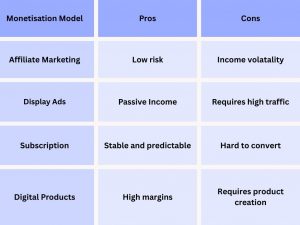
Why affiliates choose affiliate marketing
- No product creation: Affiliates can monetise content without building or maintaining products
• Global scalability: Affiliate links work across regions, platforms, and audiences
• Performance-based rewards: Earnings are tied directly to results, not impressions
Affiliate marketing is especially appealing to bloggers, niche publishers, and creators who want monetisation without operational complexity. Compared to other models, it offers the fastest path from content to revenue while remaining adaptable as traffic and strategies evolve. For many, affiliate marketing isn’t just an option, it’s the foundation of a diversified, sustainable monetisation strategy.
Compliance, Trust & Disclosure
In affiliate marketing, compliance and trust are not optional, they are foundational. As regulations tighten and search engines prioritise user protection, affiliates who operate transparently are better positioned for long-term growth in 2026 and beyond.
• Legal & ethical requirements
FTC disclosures
Affiliates are legally required to disclose their relationships with brands when promoting affiliate links. Clear disclosures inform users that commissions may be earned from purchases. These disclosures should be visible, easy to understand, and placed before or near affiliate links, not hidden in footers or vague language.
Transparent recommendations
Ethical affiliate marketing means recommending products because they provide value, not just because they pay well. Transparency builds credibility and improves conversion rates, as users are more likely to trust honest guidance over aggressive sales tactics.
Honest reviews
Balanced reviews that highlight both strengths and limitations perform better than overly promotional content. Users can easily detect exaggerated claims, and misleading content damages trust, reputation, and long-term revenue.
• Trust as a ranking factor
EEAT importance
Search engines increasingly evaluate content through EEAT signals, Experience, Expertise, Authoritativeness, and Trustworthiness. Pages that demonstrate real-world knowledge, author credibility, and accuracy are more likely to rank and sustain visibility.
First-hand usage
First-hand experience is a strong trust signal. Affiliates who show evidence of product usage, such as screenshots, tutorials, results, or personal insights, stand out from generic reviewers and improve both rankings and conversions.
Brand alignment
Promoting brands that align with your audience’s expectations strengthens trust. Mismatched or low-quality offers may generate short-term clicks but often result in poor engagement and long-term damage.
Affiliates who prioritise compliance and trust don’t just protect themselves legally, they build authority. In a crowded market, transparency and credibility are what turn visitors into loyal audiences and sustainable income streams.
The Future of Affiliate Marketing
In 2026, the future of affiliate marketing is changing due to a growing level of trust, more advanced technology and better relationships between brands and creators. Previously focused on volume and visibility, the affiliate marketing industry is now focused on authority, relevance and true value creation to the consumer. As consumers continue to become choosier about content they consume online, the affiliates who adjust to these changes will be successful.
The creator-led commerce trend is becoming more common. When it comes to purchasing products online, there is a significant shift from anonymous websites to individuals that publish reviews about products based on their personal experiences. The trend of creator-led commerce is also affecting the way that content is structured, as the emergence of hybrid content will now enable short-form video content to capture the customer’s initial interest, while long-form content helps to build understanding and increase conversion rates. Affiliates that leverage multiple platforms (e.g. social media/discovery with in-depth blog/video) are generating an increased level of engagement and lifetime value from their customers.
By 2026, though AI has altered how affiliates function, it has not supplanted human insights. AI-assisted workflows allow affiliates to evaluate search intent, discover content gaps, and structure their information much more effectively than before. Still, as much as AI has contributed to the research process, the most significant drivers of success remain originality, true knowledge and experience.
As more companies are developing direct partnerships with reliable publishers rather than relying on one-size-fits all partnerships via large affiliate networks. Such partnerships provide more favourable conditions, promote greater collaboration, and afford greater potential for long-term growth.
All these developments mean that affiliates will have to adjust their focus. Authority now prevails over volume; affiliates will continue to create fewer but higher-quality assets as opposed to creating a plethora of mediocre assets (e. g. creating a lot of mediocre content, versus developing a few truly remarkable pieces). Brand-first thinking is essential; affiliates will create content based on products they genuinely believe in rather than creating content to collect a quick profit. Sustainable revenue has replaced quick profits as the primary goal; Diversification, transparency and audience trust no longer are optional.
Conclusion
Affiliate marketing remains one of the most powerful and accessible income models in the digital economy. Its appeal lies in performance-based rewards, low entry barriers, and the ability to scale without creating products. However, as the industry matures, success is no longer defined by how many links you place or tools you use, it’s defined by the strategy behind them.
In 2026, both beginners and experienced affiliates must adapt to a more sophisticated landscape. Audiences expect transparency, search engines reward expertise, and brands seek long-term partnerships over short-term promotion. This shift places greater emphasis on trust, value-driven content, and consistency across channels. Affiliates who invest in education, niche authority, and ethical promotion build assets that grow over time.
Sustainable affiliate businesses also think beyond a single revenue stream. Many publishers strengthen stability by combining affiliate income with complementary monetisation models, such as display advertising supported by platforms like Newor Media, which help optimise revenue while maintaining a strong user experience.
Ultimately, affiliate marketing is no longer about chasing trends or exploiting loopholes. It’s about building credibility, serving real user needs, and committing to long-term growth.
FAQ Section
Q1: What is affiliate marketing?
Affiliate marketing is a performance-based revenue model where individuals or publishers earn commissions by promoting products or services through tracked referral links. When a user takes a defined action, such as making a purchase or signing up, the affiliate earns a reward. It allows creators to monetise content without owning products or managing customer support.
• Commission-based earnings
• No product creation required
• Scales with traffic and trust
Q2: How do affiliate marketing strategies work?
Affiliate marketing strategies work by combining high-quality content, targeted traffic sources, and audience trust to drive conversions. Affiliates attract users through SEO, social media, or email, educate them with value-driven content, and guide them toward relevant offers. The stronger the alignment between content and user intent, the higher the conversion potential.
• Content-first approach
• Intent-driven traffic
• Trust influences conversions
Q3: What are the best affiliate marketing strategies for beginners?
For beginners, the most effective strategies focus on simplicity and consistency. Creating SEO-optimised content within a single niche helps build authority over time. Promoting evergreen products ensures long-term earning potential, while avoiding complex funnels reduces overwhelm. Beginners who prioritise value over volume see more sustainable results.
• SEO blogs or YouTube
• Clear niche focus
• Evergreen affiliate offers
Q4: How long does affiliate marketing take to work?
Affiliate marketing is not instant. Most beginners see early traction within three to six months, depending on content quality, competition, and consistency. SEO-based strategies take longer to compound but deliver stable returns. Those who remain patient and focused are more likely to achieve lasting success.
• 3–6 months for initial results
• SEO compounds over time
• Consistency accelerates growth
Q5: Is affiliate marketing still profitable in 2026?
Yes, affiliate marketing remains profitable in 2026, but only when built around authority, trust, and audience value. Shortcuts and low-quality tactics are declining, while educators and niche experts continue to grow. Affiliates who adapt to modern strategies can still build strong, diversified income streams.
• Authority beats volume
• Trust-driven monetisation
• Long-term, sustainable model
2 Comments
Comments are closed