Website Monetization Strategies That Actually Increase RPM (2026 Publisher Guide)
Key Takeaways
- Programmatic display is the primary revenue engine for publishers – optimise it before adding other income streams.
- RPM is the only metric that matters – not revenue share. A well-configured setup produces 3–5x the RPM of a poorly configured one on identical traffic.
- Header bidding is the highest-leverage RPM change available – moving from AdSense to a multi-partner auction typically produces 80–150% RPM improvement.
- Viewability above 65% improves CPM bids – advertisers pay more for impressions that readers actually see.
- Ad code is one of the most common causes of Core Web Vitals failures – and a CWV failure reduces the organic traffic your ad revenue depends on.
- Revenue diversification belongs in the second layer – it compounds a strong programmatic base, not a weak one.
Most website monetization guides are written for website owners broadly – covering e-commerce, courses, and memberships alongside ads. For content publishers, that framing buries the most important decision: how efficiently your programmatic setup converts pageviews into revenue. This guide covers the strategies that move RPM, in order of impact.
Website Monetization Methods That Actually Move RPM
General guides like Wix’s overview of how to monetize a website cover twenty revenue streams – but for publishers, the programmatic setup is where most revenue is won or lost. A publisher at $4 RPM who adds an affiliate widget is still earning $4 RPM on most traffic. One who moves to managed header bidding at $14 RPM has tripled revenue from every future article. Fix the foundation first. Our RPM vs CPM guide explains exactly why RPM – not CPM – is the number that compounds with your growth.
How to Monetize a Website with Header Bidding
AdSense sends every impression to a single buyer with no competition. Header bidding runs a simultaneous auction across ten to fifteen demand partners – genuine price competition that drives CPMs up on the same traffic. The improvement is structural, not a campaign spike. Running it well requires full-time expertise: partner selection, floor pricing, and ongoing optimisation. This is why managed header bidding – where Newor Media handles the full configuration for publishers from 5,000 monthly users – consistently outperforms self-managed setups, with no technical overhead on the publisher’s side.
Increase Blog Revenue with Ad Placement and Floor Price Management
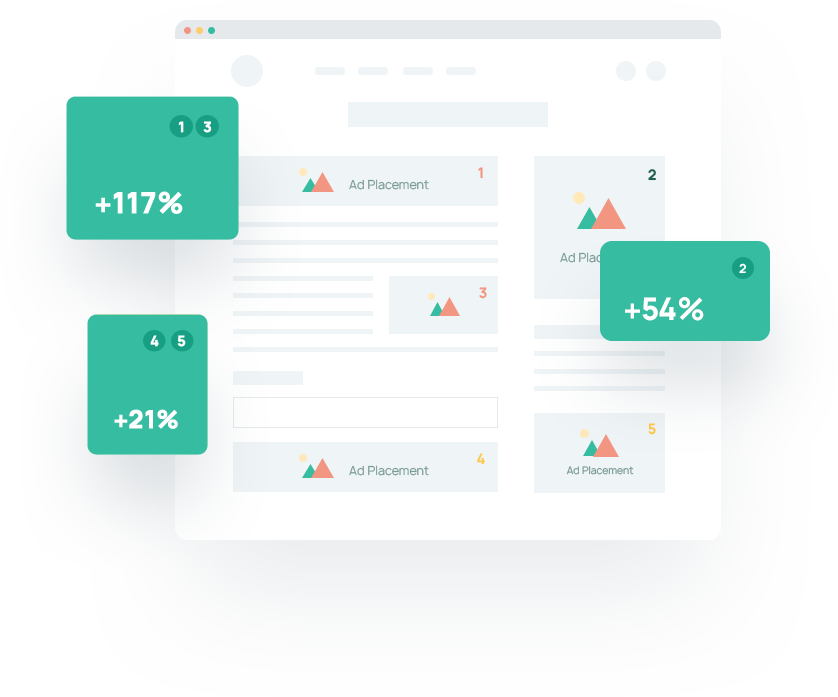
Two underrated levers that move RPM without growing traffic. First, viewability: advertisers pay more for impressions readers actually see – sticky sidebars, above-the-fold placements, and scroll-timed in-content ads consistently clear higher CPMs. Aim above 65%. Second, floor prices: static floors never revisited are always underperforming. Dynamic management, updated monthly and raised in Q4 when demand peaks, captures market rates. For niche-level RPM context, see our CPM benchmarks by industry.
Ways to Monetize a Website Beyond Display Advertising
Once programmatic is performing well, diversification compounds a strong base. Affiliate is the natural complement – review content earns display revenue from every reader and commissions from those in buying mode. Newsletter sponsorships pay $25–$80 CPM. Sponsored content produces high-margin revenue at scale. Some publishers also explore ad arbitrage – buying cheap traffic and monetising at higher CPMs – though margins are thin and traffic quality must be managed carefully. For a broader look at income stream options, Elementor’s website monetisation guide covers the full range of models available to website owners beyond advertising.
Protect Core Web Vitals to Protect Your Ad Revenue
Ad code causes Core Web Vitals failures more often than most publishers realise – layout shift from ads loading without reserved slots, render-blocking scripts delaying LCP, and event handlers hurting INP. A CWV failure reduces Google Search rankings, which reduces the organic traffic your ad revenue depends on. Google’s Core Web Vitals guidance provides the measurement framework. Practical check: confirm your network pre-reserves slot sizes in CSS before content loads and doesn’t inject render-blocking scripts into the document head. A managed network should handle this by default – verify it before adding any ad code.
Frequently Asked Questions
What is the most effective website monetization strategy for content publishers?
For content publishers, the highest-return strategy is upgrading from AdSense to managed header bidding. This single change typically produces 80–200% RPM improvement on existing traffic without any content or traffic changes. Revenue diversification through affiliate, newsletters, and sponsorships is valuable – but produces far better results layered on a strong programmatic foundation than as a substitute for fixing the primary revenue engine.
- Managed header bidding improves revenue from every future pageview – it compounds with traffic growth, content investment, and seasonal peaks.
- Diversification makes sense in the second layer – after programmatic is optimised, not instead of getting it right.
What is a good RPM for a publisher website in 2026?
RPM benchmarks vary by niche and traffic source. US desktop traffic in finance and tech can produce $15–$30 RPM on a well-configured managed setup; lifestyle and food typically range $8–$20; general content with mixed international traffic often produces $5–$12. Below $5 RPM on primarily US organic traffic almost always signals an underperforming setup – a managed header bidding migration typically produces immediate, material improvement.
- AdSense-only publishers in most niches earn $2–$6 RPM – the floor of the market for content sites.
- Always ask any new network for RPM benchmarks for your niche and traffic tier before committing.
How many ads should I run per page without hurting user experience?
Numerous publishers believe that having three to five ad placements on every single page provides the best possible ratio: one unit on top of the page, followed by two or even one unit in the text itself when there is a natural break in reading, followed by one sticky unit placed at the sidebar of the webpage or at the bottom anchor mobile placement. Moreover, the units beyond that ratio are not efficient in viewability terms – one additional unit lowers CPM ratios significantly regardless of its position on the page. Quality is more important than quantity – having four high-click-through rate units will provide much better results than eight ad placements with a low clicking rate.
- Sticky units hold their visibility during the scrolling of a user, receiving a disproportionately high CPM compared to their size on the page.
- Ad experiences that deteriorate a user’s experience are flagged by Google’s Better Ads Standards – no more auto-play videos or mobile interstitial ads!
Should I use affiliate marketing alongside display ads or instead of them?
Rather than replacing, both must work in concert. Display can convert every impression of a page without regard to intent, affiliate does the same but only for people who have already made a decision to buy. By doing both, you can make money at every inning of the revenue making game. The one thing to avoid doing is stripping display ads from review pages to help with affiliate programs because the incremental income from affiliate source will rarely help to balance the missing display income.
- Affiliate income needs constant development of new material which refers to comparisons and reviews, while display needs only traffic.
- Leave display ads on affiliate reviews because display income is guaranteed whereas income from affiliates is uncertain.
How do Core Web Vitals affect ad revenue, and what should I check?
The impact of CWV can be seen in two ways, affecting ad revenue. Firstly, low scores negatively affect the Google Search ranking and organic traffic – your main provider of impressions. Secondly, layout shift caused by ads loading without an assigned space reduces user engagement and leads to decreased viewability and CPMs. As such, make sure that the ad network reserves a slot size in CSS and does not use rendering-disturbing scripts in the head of the document.
- Use Google Search Console and PageSpeed Insights to make sure that the ad code is responsible for the CWV issues.
- Making sure that the ad slots size is pre-reserved in CSS is the way to go in order to fix layout shift caused by ads.